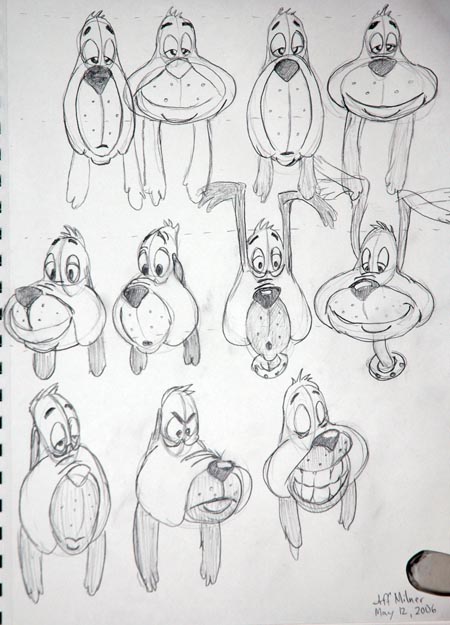
Squash and stretch are one of the fundamental laws of animation as it emulates motion blur while giving the character or object in motion personality. Squash and stretch can also give a sense of material. For example a ball that doesn’t squash or stretch could be interpreted as a rock or bowling ball.
Timing and motion
The timing and motion of a character has influence over any action they do. Adding a few more frames to an action can dramatically change how that action is interpreted. For example if a character has one frame with them standing straight, and another on the floor, it would be assumed that they were knocked over, adding more frames would give more clarity.
Anticipation
(Above is a link to a small animated example of anticipation.)
Anticipation is used to further exaggerate an action of an object or character, whilst also maintaining a level of realism. It is the action taken before a primary action, for example; swinging a bat back before hitting a ball or bending knees before a jump.
Staging

Staging is used to present an idea or objective through the composition of the scene. This is used a lot in animation because it is where it can be most easily done.
Follow Through and Overlapping

Follow through is almost the opposite of anticipation. It is used to either end an action or to transfer the action to another action.
Straight ahead action and pose to pose
Straight ahead action is where the animator does not use key frames or any other tool to plan out the animation, which causes significant problems if trying to maintain realism, however this method is sometimes necessary when animating through other media, for example the popular YouTube video MUTO, which is animated using graffiti across the sides of buildings, or whiteboard animation. Straight ahead action is useful for providing a sense of surrealism. Pose to pose is the typical method used by animators where key frames are used for consistency and to plan out actions. The frames in between poses are filled in later on.
Slow in and out
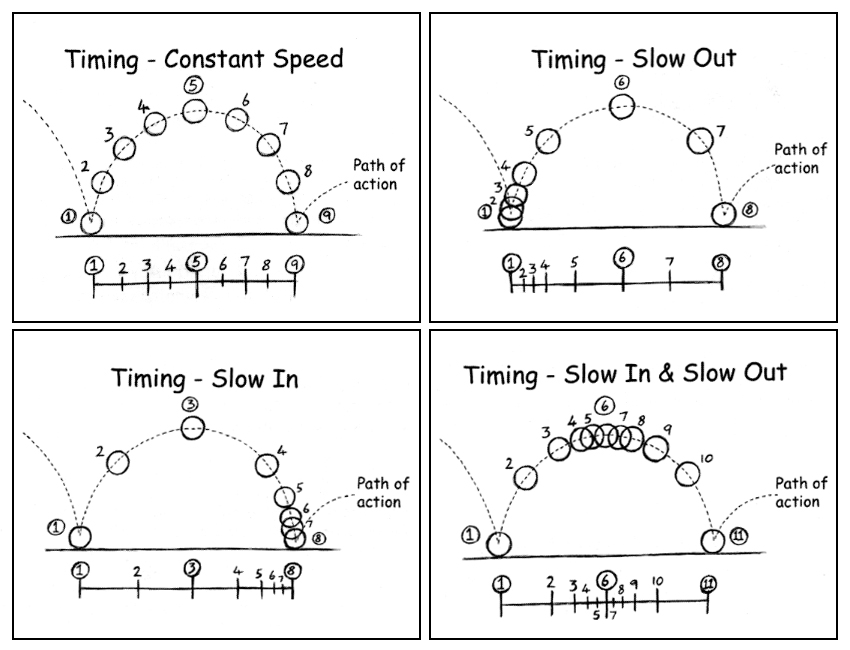
Slow in and out is commonly used to emulate momentum of an object or character and maintain believability.
Arcs
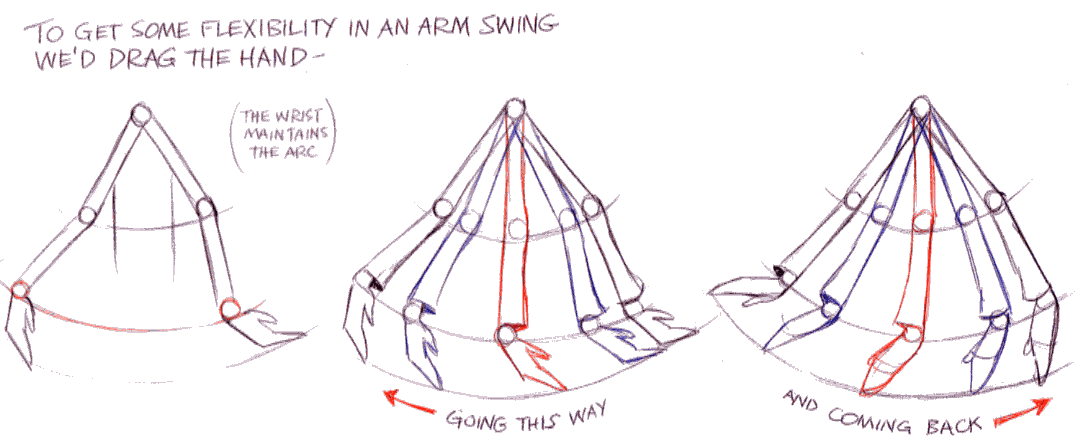
Arcs are used in animation to express movement in a natural and fluent way. Most actions that are acted out by technological means move from point to point, whereas actions carried out by natural means typically move in an arc.
Exaggeration
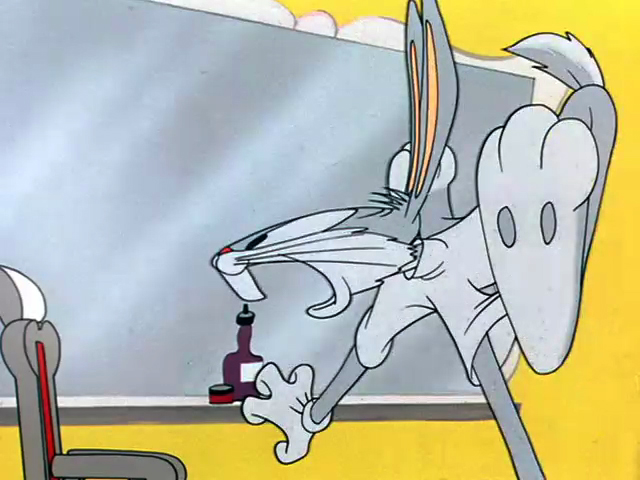
Exaggeration is the distortion of an object or character which is used to give visual cues to the personality of what is being animated or simply for aesthetic purposes.
Secondary Action
Secondary action is the animation of an object or character which moves according to another object or character. A tail of an animal is an example of secondary animation. It is used to give the world being created more believability.
Appeal

Appeal concerns the general visual style. It isn’t absolutely necessary for something to be more accurate visually, or to have the most animations in a scene (i.e. Final Fantasy, Star Wars prequels). Animations can appeal through the style of drawing and movement, or the content of the scenes.
Personality

Personality covers every object included in animation, how it looks, how it moves. Every object should either present its own personality or contribute to the general theme of the animation, creating an inventive, interesting world.

No comments:
Post a Comment