Sunday, 27 February 2011

Animation Reviews

While studying animation I decided it would be a good idea to review some animated films that I have seen this year. Without realising, it turns out I’ve watched a lot of very interesting and dramatically different animations.

The Illusionist

The Illusionist was a bleak and brilliant look at a world leaving a group of people behind, similar to the portrayal in the Coen brother’s ‘No Country for Old Men’. The people in this case aren’t the elderly, but performers. The performers are now trying to live and work in a world of television and rock and roll. It is all hand drawn, frame by frame. The style is stunning, providing a visual character of everyone on the screen.


Wall-E

As much as I admire Pixar and their works, I do see a lot of their films as being predominantly for a younger audience. Then I saw this film. It wasn’t so much a kids film as a good sci-fi film, depicting a future very relevant to current affairs, such as environmental issues as well as general health and fitness issues apparent in the western world. As expected from Pixar it was CG, though it was also their first case of introducing live action footage as well. The aesthetics are pleasant, though I felt the humans were a little to ‘cartoonish’.


Akira

I will first admit that I am not a fan of Japanese animation (I’ve yet to see a studio Ghibli film), however this film was recommended from a trustworthy source, and I can see why. It has some of the most impressive animated sequences I have seen. It is all hand drawn, and doesn’t suffer from the usual anime issue of 3 frames a second sequences, or 2 frames played over a 20 second monologue. Akira is set in post World War 3 Japan, as it follows a bike gang’s involvement with a government funded ESP research centre.


Mary & Max

Mary & Max is a stop motion feature length film telling the story of two pen pals. It’s a dark, quirky look into the troubled lives of these people. The aesthetics are generally pleasant, it’s hard not to like the organic look of most stop motion films. I would say that maybe more design should have gone into the settings, as the same ones are seen again and again, with not much to say about the character.


Waking Life

This film is the most bizarre of the lot. The story is of a boy dreaming, and meeting characters within his subconscious discussing life, death, dreams, evolution, language and plenty of other topics. It uses a technique called rotoscoping, as seen in the film also directed by Richard Linklater, ‘A Scanner Darkly’, though I feel Waking Life uses this technique a lot more effectively. The reason it is so bizarre is because it is completely reliant on live action footage, and is simply animating over the top of that footage. One could say that this makes it more of a post production effect than an animation technique, but I feel that the style is so interesting and flexible that it isn’t enough to just apply it to the film, it has to be designed. More time was spent doing the animation of Waking Life and A Scanner Darkly than was spent filming them.

Wednesday, 16 February 2011

The 12 Principles

The 12 principles of animation were originally conceived by  Frank Thomas and Ollie Johnston, both of whom were Disney animators. 


The first of the twelve is Squash and Stretch.


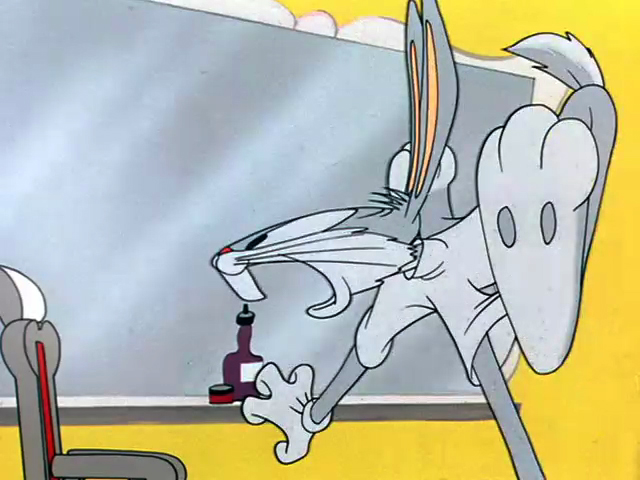
Squash and stretch are one of the fundamental laws of animation as it emulates motion blur while giving the character or object in motion personality. Squash and stretch can also give a sense of material. For example a ball that doesn’t squash or stretch could be interpreted as a rock or bowling ball.


Timing and motion

The timing and motion of a character has influence over any action they do. Adding a few more frames to an action can dramatically change how that action is interpreted. For example if a character has one frame with them standing straight, and another on the floor, it would be assumed that they were knocked over, adding more frames would give more clarity.


Anticipation

(Above is a link to a small animated example of anticipation.)

Anticipation is used to further exaggerate an action of an object or character, whilst also maintaining a level of realism. It is the action taken before a primary action, for example; swinging a bat back before hitting a ball or bending knees before a jump.


Staging

Staging is used to present an idea or objective through the composition of the scene. This is used a lot in animation because it is where it can be most easily done.


Follow Through and Overlapping

Follow through is almost the opposite of anticipation. It is used to either end an action or to transfer the action to another action.


Straight ahead action and pose to pose

Straight ahead action is where the animator does not use key frames or any other tool to plan out the animation, which causes significant problems if trying to maintain realism, however this method is sometimes necessary when animating through other media, for example the popular YouTube video MUTO,  which is animated using graffiti across the sides of buildings, or whiteboard animation. Straight ahead action is useful for providing a sense of surrealism. Pose to pose is the typical method used by animators where key frames are used for consistency and to plan out actions. The frames in between poses are filled in later on.

Slow in and out

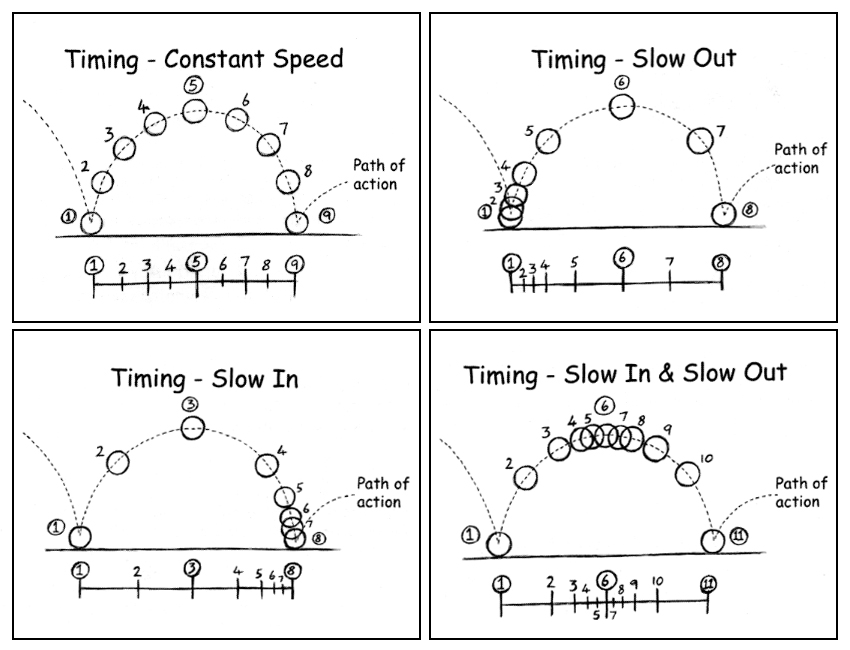
Slow in and out is commonly used to emulate momentum of an object or character and maintain believability.


Arcs

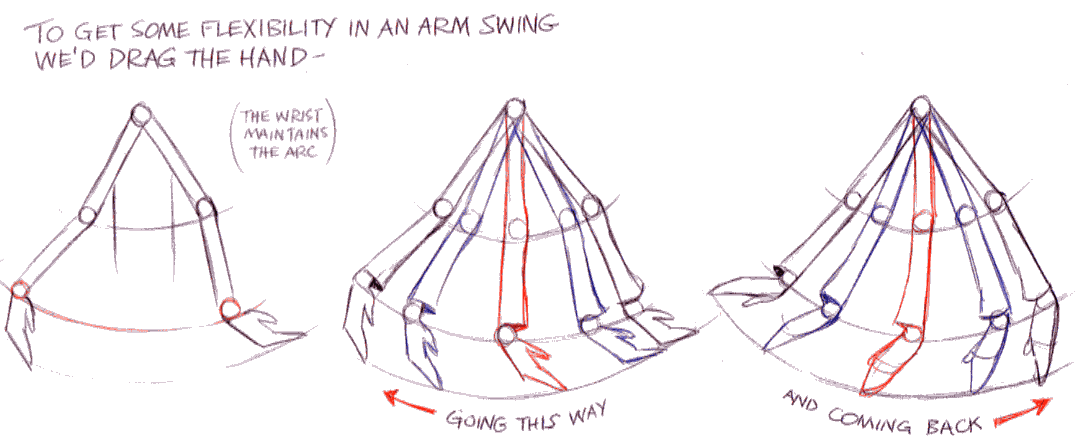
Arcs are used in animation to express movement in a natural and fluent way. Most actions that are acted out by technological means move from point to point, whereas actions carried out by natural means typically move in an arc.


Exaggeration

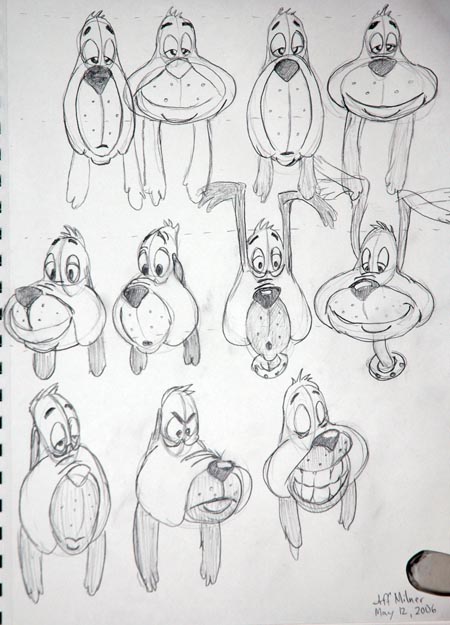
Exaggeration is the distortion of an object or character which is used to give visual cues to the personality of what is being animated or simply for aesthetic purposes.


Secondary Action

Secondary action is the animation of an object or character which moves according to another object or character. A tail of an animal is an example of secondary animation. It is used to give the world being created more believability.


Appeal

Appeal concerns the general visual style. It isn’t absolutely necessary for something to be more accurate visually, or to have the most animations in a scene (i.e. Final Fantasy, Star Wars prequels). Animations can appeal through the style of drawing and movement, or the content of the scenes.


Personality

Personality covers every object included in animation, how it looks, how it moves. Every object should either present its own personality or contribute to the general theme of the animation, creating an inventive, interesting world.